
Ingredient know-how · 2 min read
Same Ingredient, Different Results: Why Cut, Grind and Quality Matter
Whole, coarse cut, tea bag cut and powder have different jobs. Match the form to the recipe and process.
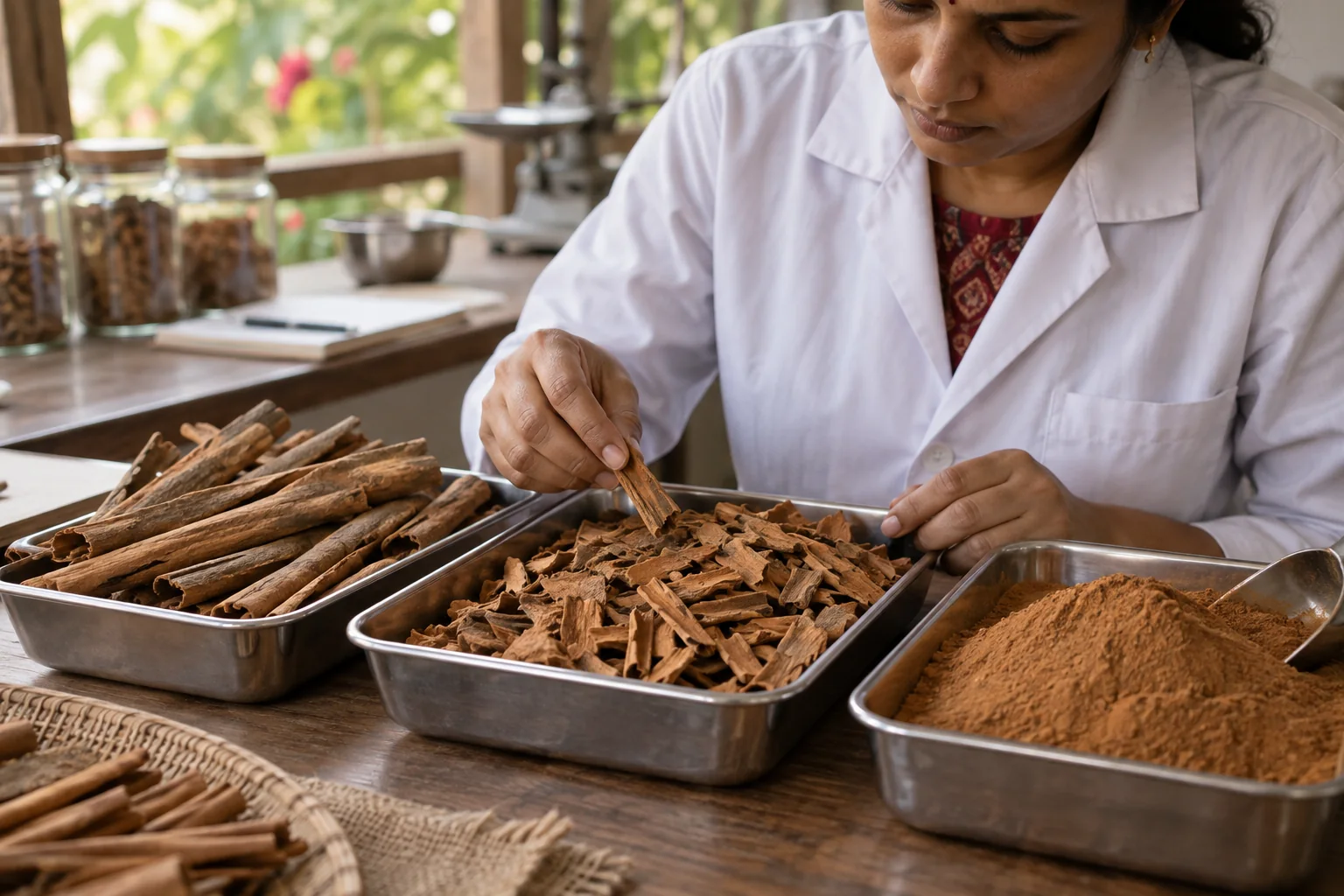
The name is only part of the ingredient
Two bags can carry the same botanical name and produce very different experiences in a recipe. One may contain recognisable pieces, another a coarse cut and another a fine powder. That difference affects how a customer sees, handles and prepares the product. Selecting the form is therefore part of product development, not a detail to leave until ordering.
Start with the intended process. A visible whole spice may suit a blend where appearance matters. A cut material may suit an infusion. A powder may be easier to incorporate into a dry mix, but it can introduce different questions about dust, dispersion and texture. These are practical starting points, not rules that replace trials with the actual material.

Turn a label into a measurable requirement
Terms such as C/S, meaning cut and sifted, and TBC, meaning tea bag cut, are useful catalogue shorthand. They do not guarantee identical particle dimensions across every supplier or ingredient. Ask for the proposed particle-size range or sieve specification, the tolerated fine material and a representative sample. If you use “coarse” in a brief, explain what you mean.
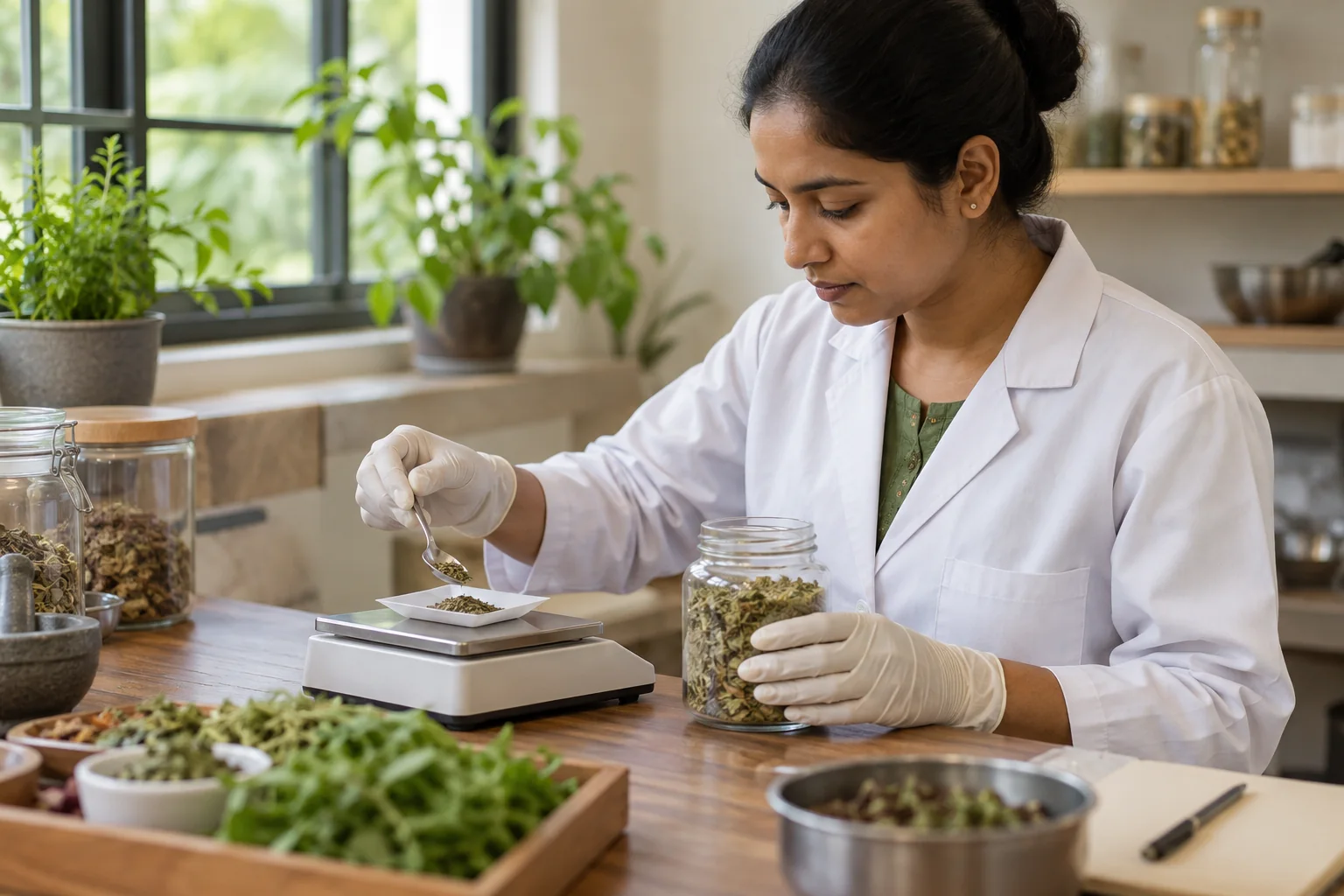
Compare samples using the same recipe, ingredient weight, water volume and preparation method. For an infusion, note the appearance, flavour and sediment under your intended conditions. For a powdered blend, watch how it mixes, fills and behaves after storage. A photograph can help you shortlist a form, but it cannot establish the particle distribution or confirm that a material will run through your equipment.
| Form | Start the discussion with | Check in your trial |
|---|---|---|
| Whole | Visible plant parts and presentation | Handling, appearance and preparation method |
| C/S · coarse cut | The proposed cut and sifted particle range | Infusion, fine material and consistency |
| TBC · tea bag cut | Your bag format and filling process | Filling behaviour, infusion and sediment |
| Powder | The agreed grind or sieve specification | Mixing, texture, dust and storage behaviour |
These are trial questions, not a guarantee of performance. Confirm the specification and evaluate the actual material in your intended process.
Approve the result you need to repeat
Keep the preferred sample’s reference with your notes and agreed specification. If you change the cut or supplier, repeat the checks that matter rather than assuming the old recipe will behave identically. WHO’s herbal-material quality guidance includes methods for assessing material characteristics; a qualified team should choose suitable methods and acceptance criteria for the particular application.
On Root2Leaf’s ingredient pages, explore the available forms and use them to start a precise enquiry. Confirm availability, processing requirements and the specification before purchase. A founder developing a ginger infusion and a manufacturer making a fine spice blend may reasonably select different forms of the same plant. Neither choice is automatically more premium. The better ingredient is the one that meets the agreed identity, quality and performance requirements while delivering the experience your customer expects.
Choose a particle specification for your application, then confirm it with a representative sample.
Reading & editorial references
- World Health Organization. Quality control methods for herbal materials. 2011.
- Root2Leaf ingredient catalogue: available forms and application discussions.
Keep your curiosity growing.
All stories ↗
Big Idea, Small First Batch: A New Founder’s Guide to Buying Ingredients
Plan your first ingredient order with a clear trial brief, sensible quantities and a specification you can repeat.
Read the story
Before You Buy the Ingredient, Ask for the Evidence
Understand specifications, batch reports and certification scope before approving a botanical ingredient.
Read the story
From Trending Ingredient to Launch-Ready Product: What Should You Check First?
Move from an exciting ingredient idea to a useful product by checking taste, format, evidence, rules and repeatability.
Read the story